Market & Expansion
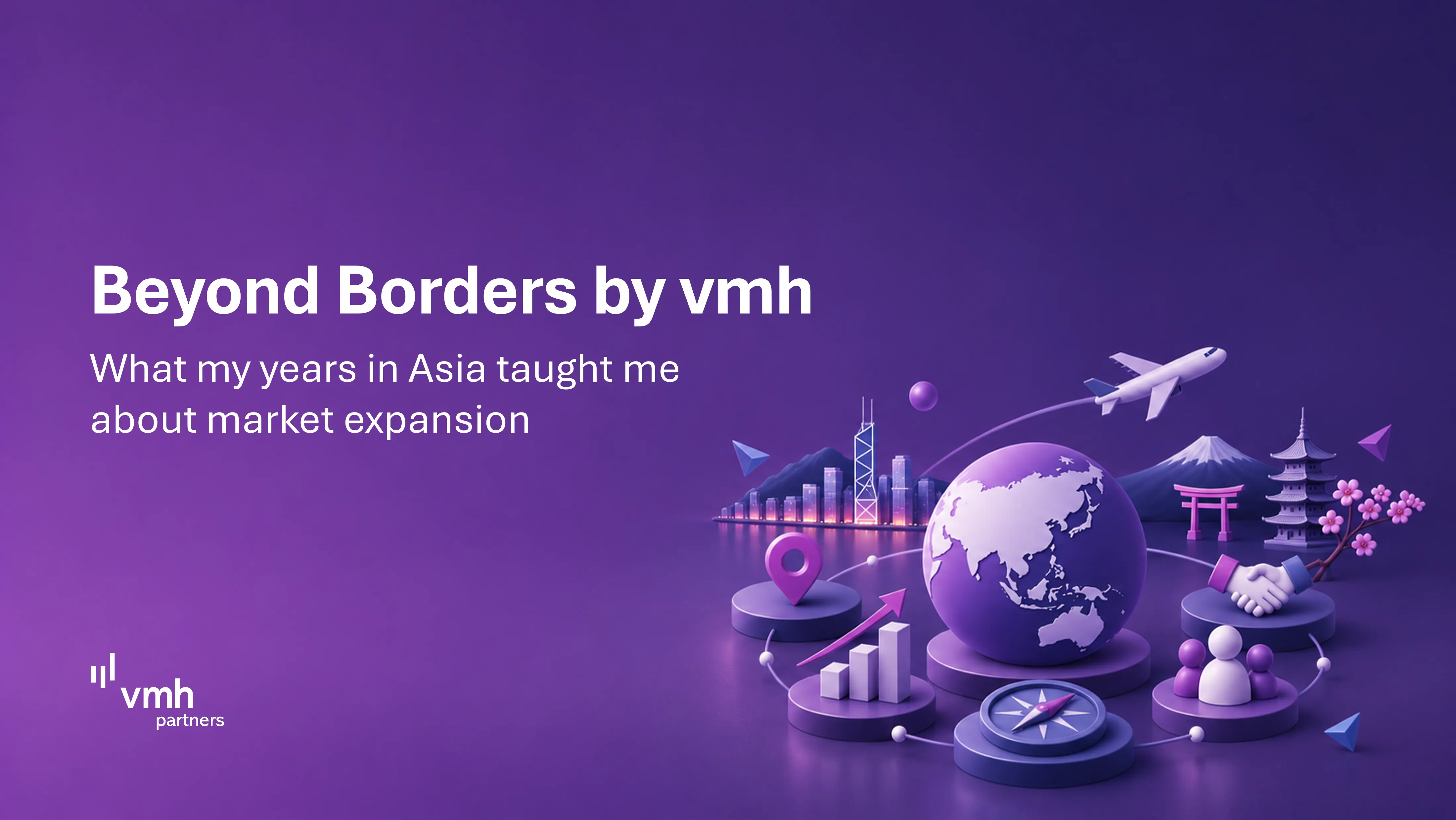
What my years in Asia taught me about market expansion
When I moved to Hong Kong in 2017, I was not thinking about “market expansion” as a consulting discipline. I was thinking about operations
What my years in Asia taught me about market expansion
When I moved to Hong Kong in 2017, I was not thinking about “market expansion” as a consulting discipline. I was thinking about operations.
My responsibility covered a large and highly diverse region: Southeast Asia, together with South Korea and Mongolia. The geographical distances were substantial, but the bigger challenge was understanding how differently business could function across markets.
Looking back, many of the situations I experienced have shaped how I think about international expansion today.
1. Market attractiveness is only the starting point
A market can have attractive demographics, strong demand and favourable growth rates. That tells you there may be an opportunity. It does not tell you whether your organisation is equipped to capture it.
Expansion creates questions around sales channels, customer access, local leadership, capabilities, governance, partnerships and integration with headquarters.
The commercial case and the organisational case therefore need to be developed together.
2. Context changes the meaning of behaviour
Working across Asia repeatedly reminded me that behaviour cannot be interpreted independently of context.
Communication that appears indirect may serve an important function. Hierarchy that feels excessive from one perspective may be completely normal from another.
Relationship-building that appears inefficient may be commercially essential.
The danger for international companies is not simply failing to understand another culture. It is failing to recognise that their own way of doing business is also culturally shaped.
3. Relationships are part of the operating model
My experiences with Chinese business partners were particularly instructive. What I initially regarded as unnecessary travel, excessive hospitality or inefficient proximity later looked very different once I understood the importance of relationships and personal presence.
That has a broader strategic implication. Relationships are sometimes treated as a “soft” element of international business. In reality, they can influence access to customers, partners, talent, information and decision-makers.
In some markets, relationship architecture is effectively part of the go-to-market model.
4. Replication is not the same as expansion
One of the easiest approaches to entering a new country is to reproduce what already works at home.
It is also potentially one of the most dangerous.
Some elements of the business should remain consistent. Others need localisation. The challenge is identifying which is which.
Companies therefore need to make deliberate choices around value proposition, route to market, local partnerships, organisational structure, leadership, decision rights, talent and capabilities, and processes and governance.
The objective should not be to create a completely different organisation in every country. Nor should it be to impose the home-market model everywhere.
The task is to determine the minimum necessary adaptation for maximum local effectiveness.
5. Execution should influence strategy from the beginning
Market-entry projects are often treated sequentially:
analyse → decide → implement.
My experience suggests the boundaries should be less rigid. Implementation questions should influence the strategy before the investment decision is made.
If the required talent is unavailable locally, that matters to the business case. If the route to market requires partnerships that take years to establish, that matters. If headquarters is unwilling to delegate the decisions that need to be taken locally, that matters. If the organisation does not have the management bandwidth to support another geography, that matters too.
A robust expansion strategy therefore needs to answer not only:
“Should we enter?”
but also:
“Can we realistically make this work?”
Experience first, theory afterwards
When I returned to Switzerland in 2022, one thought stayed with me during my International Management studies:
I wish I had known some of this before moving to Asia. The frameworks gave names and structure to situations I had previously experienced intuitively. At the same time, perhaps experiencing those situations first made the theory much more meaningful. Today, those experiences form part of how I approach Market Expansion advisory work at vmh partners.
For me, market expansion is not simply about identifying an attractive geography. It is about connecting four questions:
Is the market attractive?
How will we win there?
What organisation do we need?
How will we make it work in practice?
That last question is often where the real work begins.

Organisation Advisory
Adrian von Moos
Founding Partner & Managing Director