The HR Insight
Leadership is not an HR task
When it comes to employees, HR is often the first point of contact.
When it comes to employees, HR is often the first point of contact. Whether dealing with conflicts, performance issues, difficult personnel decisions or important conversations, HR is expected to provide support and develop solutions.
Providing this support is, of course, part of a professional HR function.
However, it becomes problematic when HR goes beyond providing support and starts taking on leadership responsibilities.
In our current LinkedIn series, we have explored the question of where HR’s responsibility begins and where it ends.
Leadership cannot be delegated to HR
The importance of direct line managers is often underestimated.
Gallup (2024) points out that approximately 70% of the differences in employee engagement between teams can be statistically attributed to their respective managers.
Through their day-to-day decisions, managers influence how employees work together, what performance expectations they have and how they develop.
HR can provide professional advice and help managers prepare for difficult situations. However, it cannot manage employee conversations or day-to-day people management decisions on their behalf.
For example, HR can develop feedback processes, prepare managers for difficult conversations, mediate conflicts or provide performance appraisal tools.
However, HR cannot actually take over leadership conversations and decisions.
Whether employees receive regular feedback, expectations are communicated clearly and problems are addressed early ultimately depends on how managers lead their teams every day.
Responsibility alone is not enough
A 2023 report by the CIPD shows that only 53% of surveyed managers receive sufficient support for their people management responsibilities. Furthermore, just 50% say they have enough time to fulfil these responsibilities.
Organisations that expect good leadership must also ensure that good leadership is possible.
This requires clear expectations of the leadership role, the necessary skills, sufficient time and appropriate tools.
This is where HR has an important role to play.
HR can identify development needs, define standards, develop methods and provide support with complex people-related matters.
Whether HR can deliver development programmes itself depends, among other factors, on the size of the organisation, its HR structure and the roles available within the HR function.
While some HR departments have dedicated specialists in learning and leadership development, others primarily take on an advisory and coordination role. Depending on the organisation’s needs, external trainers, coaches or other specialists may therefore be brought in.
At the same time, managers must be willing to accept this support, invest in their own development and take responsibility for their leadership role.
And what is the executive management’s responsibility?
Executive management determines what is expected of managers, how leadership responsibilities are embedded within the organisation and what resources are made available.
This also applies to leadership development.
Leadership development is an investment that requires not only money, but also time.
External training programmes and coaching involve direct costs. At the same time, managers attending development programmes are unavailable, or only partially available, for their operational responsibilities.
HR can identify development needs and recommend and organise appropriate measures. However, it is executive management that decides whether to allocate the necessary financial resources and free up managers’ time.
Executive management is also responsible for involving HR in key business decisions. When decisions affect employees, leadership or organisational structures, HR needs to be involved at an early stage – rather than only when the people-related consequences need to be implemented.
An organisation cannot set high expectations for its managers while allocating all their working hours to operational tasks. People management and leadership development require dedicated time and capacity.
Ultimately, responsibility for effective leadership lies with executive management.

Three levels, one shared responsibility
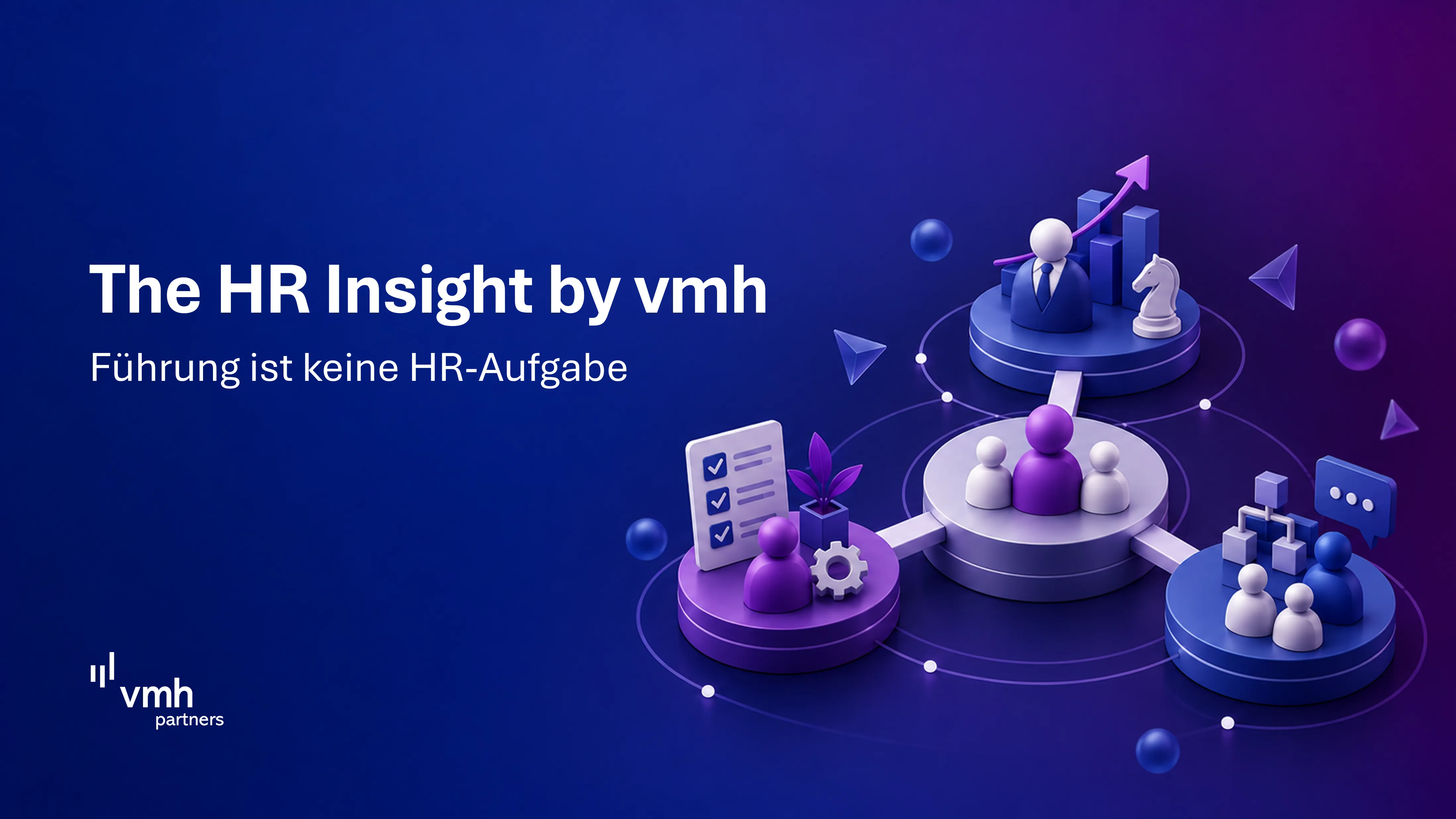
For leadership to work effectively within an organisation, three levels must work together:
Executive management defines leadership expectations, establishes responsibilities and ensures that the necessary conditions and resources are in place.
Managers take direct responsibility for their employees, make leadership decisions, continue developing their skills and put expectations into practice in their daily work.
HR contributes its people-related and methodological expertise, prepares decisions, develops tools and coordinates internal or external support where needed.
These roles are distinct, but interdependent.
HR can support managers, but it cannot take over their responsibilities. For leadership to work effectively, managers must fulfil their role, while executive management must create the conditions that enable them to do so.

People Advisory
Andrea Horvath
Founding Partner & Managing Director